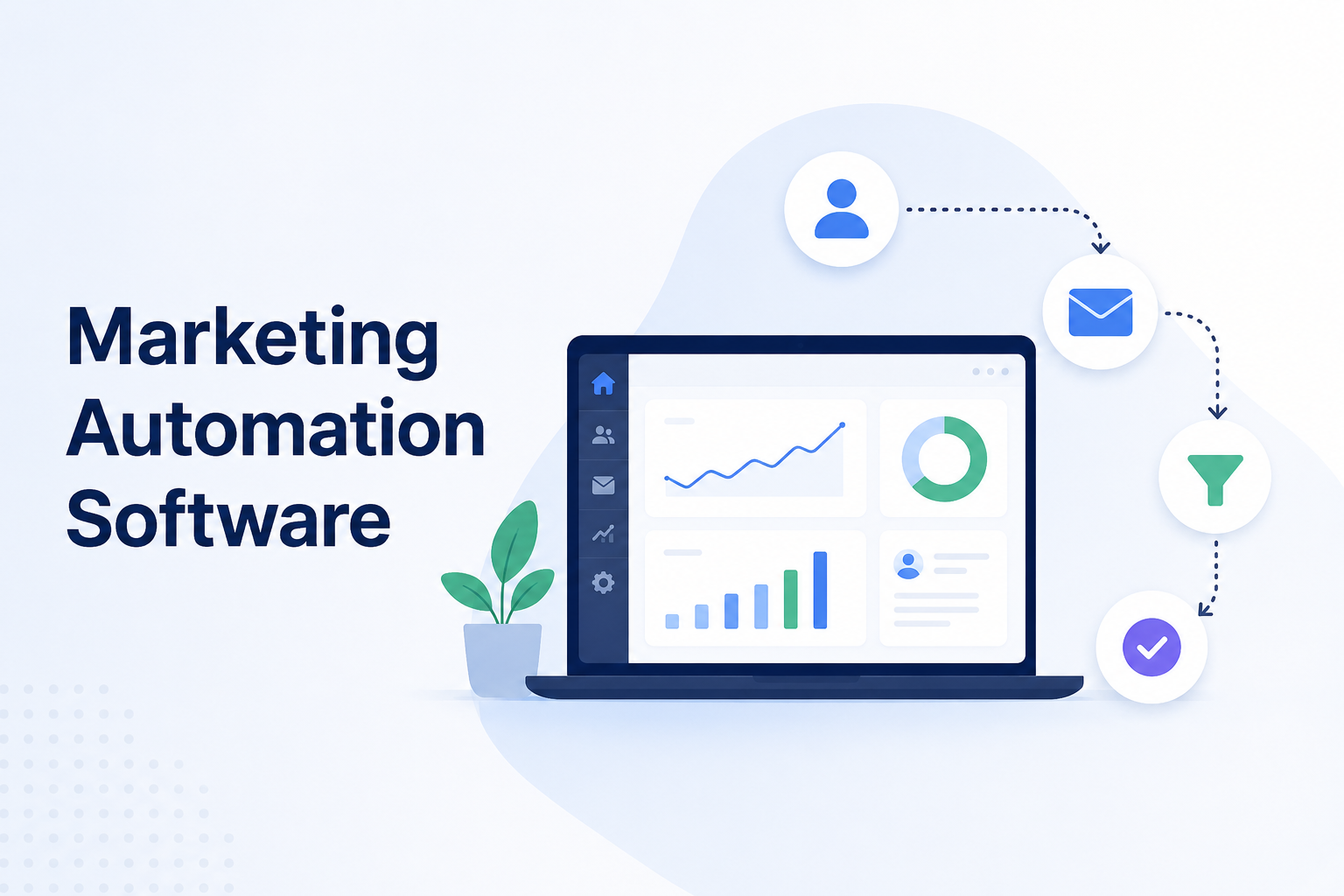
Marketing Automation Software: How to Choose the Right Tool in 2026

Par Olivia Hart
Équipe éditoriale MyClaw
MyClaw
Lancez OpenClaw maintenant
Découvrez comment l'hébergement, l'automatisation, les paiements, le support et les opérations OpenClaw se réunissent dans une expérience produit gérée.
AI Takeaway
Quickly, this guide answers:
- What does marketing automation software actually automate?
- Which features matter most before choosing a platform?
- How should you compare marketing automation tools like HubSpot, ActiveCampaign, Brevo, Klaviyo, Customer.io, Salesforce, and Marketo?
- Where do AI agents fit when ordinary automation still leaves manual work behind?
Marketing automation software sounds simple until you compare tools. One platform is great for email automation. Another is built around CRM and lead scoring. Another is best for ecommerce retention. Enterprise tools promise full customer journey orchestration, but they may also bring setup time, contracts, consultants, and a price tag that only makes sense once marketing operations is mature.
The better way to choose is to start with the work. What should happen after a lead, signup, purchase, demo request, or product event? Which parts are stable enough to automate, and which still need judgment?
That last question matters more now because AI marketing automation software can help with research, summaries, drafts, reporting, and cross-tool work. It does not replace traditional marketing automation, but it changes what the full workflow can look like.
What Is Marketing Automation Software?
Marketing automation software automates recurring marketing actions across email, SMS, WhatsApp, landing pages, forms, ads, CRM records, and customer journey workflows.
At the basic level, the platform watches for a signal and responds. A lead fills out a form and receives a welcome sequence. A trial user stops logging in and gets a reactivation email. A customer buys and enters a post-purchase flow.
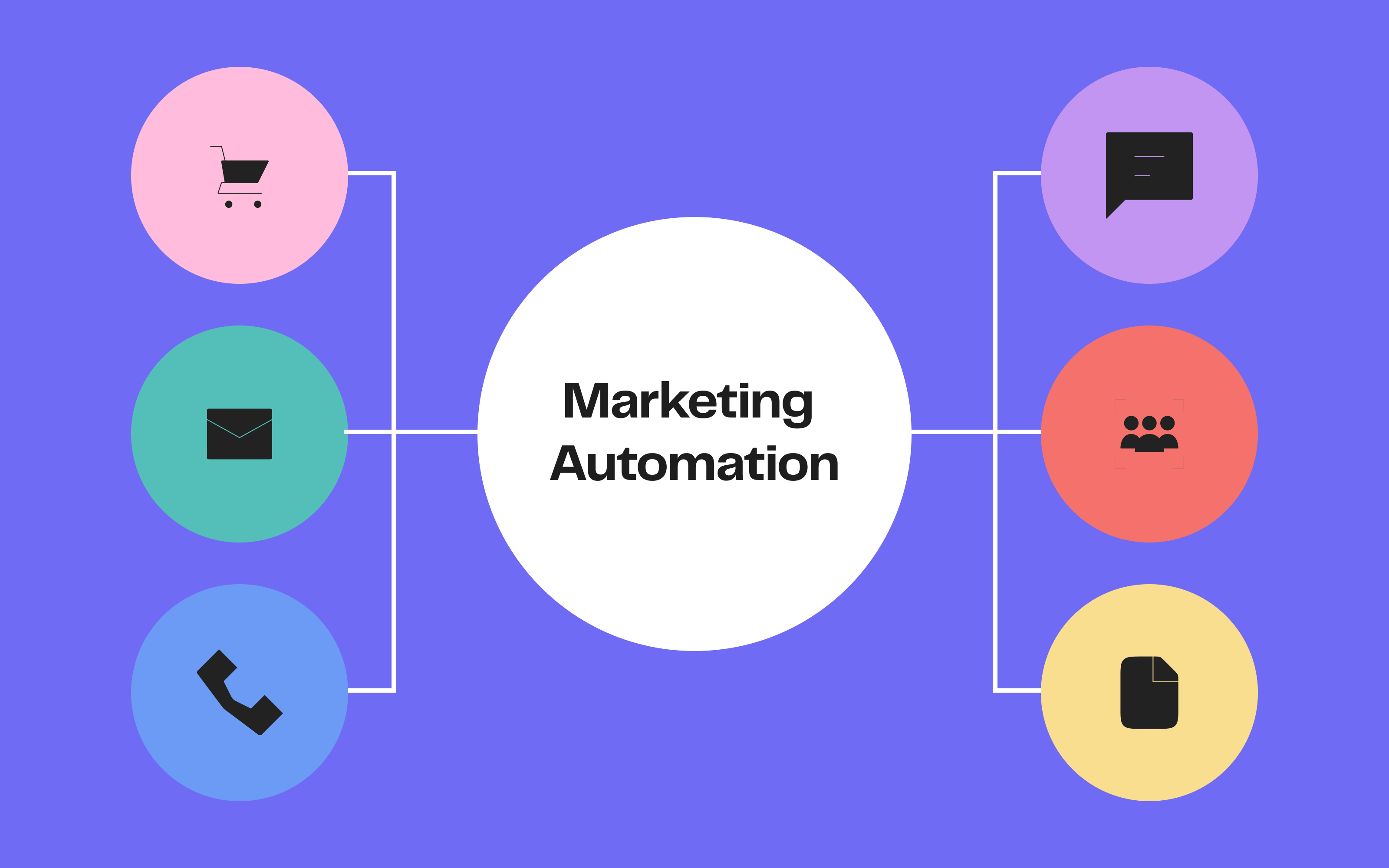 The useful part is that the action is tied to context: behavior, lifecycle stage, source, company size, purchase history, or product usage.
Marketing Automation vs. Email Marketing vs. CRM
These categories overlap, but they are not the same:
| Category | Main Job | Common Use |
|---|---|---|
| Email marketing | Send campaigns and newsletters | Announcements, promotions |
| CRM | Manage contacts and pipeline | Lead ownership, deal stages |
| Marketing automation | Trigger customer journeys from behavior and data | Lead scoring, segmentation, multi-step flows |
| Workflow automation | Connect apps and move data | Form to CRM, CRM to Slack |
If the job is just sending newsletters, a lighter email tool may be enough. If the job is lifecycle messaging, sales handoff, retention, or multi-channel follow-up, marketing automation tools become more useful. For broader app-to-app work, see workflow automation software.
What to Compare Before You Choose a Tool
Many bad software decisions come from comparing logos instead of workflows.
✅ Lead Capture and Forms
Start with how leads enter the system: landing pages, forms, popups, event tracking, source attribution, and CRM handoff.
✅ Segmentation and Personalization
Good segmentation separates people by behavior, lifecycle stage, company profile, purchase history, and product activity.
✅ Journey Builder and Branching Logic
The journey builder should be understandable at a glance. You want triggers, delays, branches, exits, goals, and a history of what happened.
✅ CRM and Sales Handoff
For B2B teams, this is often the deciding feature. A good system tells sales why the lead matters and what should happen next. If sales work is the bottleneck, see tools to automate sales workflow.
✅ Analytics and Revenue Attribution
Opens and clicks are not enough. Look for conversion tracking, funnel movement, campaign influence, and revenue attribution.
Popular Marketing Automation Platforms by Best Fit
There is no universal best marketing automation software. The best choice depends on your business model, team size, budget, and complexity.
1. MyClaw - Best for AI Agent Marketing Operations Around Your Stack
 MyClaw is not a traditional email or CRM automation platform. It is a better fit when the work around marketing automation is the bottleneck: competitor research, lead research, campaign briefs, browser checks, reports, files, and cross-tool follow-through.
Use MyClaw when you want a private OpenClaw instance that can stay online and support agent-style marketing operations without self-hosting. It works best alongside marketing automation platforms like HubSpot, ActiveCampaign, Klaviyo, or Customer.io. The structured journey still belongs in the automation platform; MyClaw helps prepare and execute the surrounding work.
2. HubSpot - Best If You Want One System
 HubSpot is the obvious option when you want CRM, forms, landing pages, email automation, reporting, and sales alignment in one place. It is polished, but the cost can rise quickly.
It is useful for teams that want marketing, sales, and reporting in the same ecosystem. Deeper automation usually sits in higher tiers, so cost can grow with contacts and workflows.
3. ActiveCampaign - Best for Strong Automation Without Enterprise Weight
 ActiveCampaign fits smaller teams that care about conditional logic, tagging, scoring, and email workflows without enterprise weight.
It is a strong middle ground for teams that have outgrown newsletter tools but do not want HubSpot-level cost or Salesforce-level complexity.
4. Klaviyo - Best If You Are Ecommerce-First
It makes the most sense when Shopify, e-commerce events, product data, and repeat purchase behavior are central to your marketing.
5. Brevo and Mailchimp - Best for Lightweight Email-Led Automation
 Brevo and Mailchimp fit lighter email-led automation. Brevo is useful when budget and multi-channel messaging matter. Mailchimp is familiar for campaigns, simple journeys, forms, and basic segmentation.
These tools are often enough for early-stage teams, local businesses, and simple nurture flows. The limit appears when workflows need deeper branching, scoring, or sales alignment.
6. Customer.io - Best If You Are Product-Led
 Customer.io makes sense when product events drive the journey. Trial activity, feature usage, plan changes, inactivity, and lifecycle signals can shape messaging.
It is strongest when your team has clean first-party data and wants lifecycle communication based on what users do inside the product.
7.. Salesforce and Marketo - Best for Enterprise Marketing Operations
 Salesforce Marketing Cloud and Adobe Marketo fit enterprise B2B teams with dedicated marketing operations. They are built for account-based marketing, complex journeys, scoring, attribution, and sales alignment.
The tradeoff is ownership. These platforms need budget, implementation time, clean data, and people who can maintain the system.
Where Traditional Marketing Automation Still Falls Short
Marketing automation platforms are good at known workflows inside a defined system. The gap is everything around that system: research, competitor checks, call summaries, campaign briefs, social signals, brand mentions, reports, and docs.
That work still shapes campaigns, but it often does not fit a clean trigger-action sequence. Social media automation can capture audience signals, while brand tracking tools can show when mentions or competitor changes deserve action.
How AI Changes Marketing Workflow Automation
AI is useful when the input is messy. A form submission is structured; a sales call, Reddit thread, competitor page, review, or webinar transcript is not.
The best use cases sit close to the campaign:
- Turning customer questions into content ideas.
- Monitoring competitor pages and pricing changes.
- Drafting campaign briefs from scattered research.
- Creating weekly performance summaries.
This does not mean every action should be fully automated. A safer pattern: AI prepares context, a human reviews judgment-heavy parts, and the platform sends or routes the approved workflow.
A chatbot can answer a question. An AI agent can use tools, work across steps, and keep moving toward a goal. This AI agent vs chatbot guide explains the difference.
When an AI Agent Belongs in Your Marketing Stack
An AI agent is not a replacement for HubSpot, ActiveCampaign, Klaviyo, or Customer.io. It is more useful as the layer around those marketing automation tools: the part that handles research, preparation, monitoring, and cross-tool execution.
Imagine a team notices more interest around a competitor comparison keyword. A marketing automation platform can segment leads, send a nurture sequence, alert sales, and track conversions. But before that, someone needs to inspect competitor pages, summarize objections, and prepare sales context.
A Practical Workflow
| Step | What Happens |
|---|---|
| Detect signal | Traffic, mentions, lead source, or competitor change appears |
| Prepare context | Summarize pages, objections, questions, and campaign angles |
| Run journey | Segment, email, notify, route, score, and track |
| Review results | Summarize performance and suggest next tests |
For teams that want this kind of always-on AI operator without self-hosting OpenClaw, MyClaw provides a private OpenClaw instance for agent-style marketing operations workflows.
Start with one recurring workflow: competitor monitoring, lead research, campaign briefs, or reporting. Make it reliable, add review points, then connect it to the stack.
How to Choose the Right Marketing Automation Software
Start with your primary business model.
If you sell to businesses, prioritize B2B marketing automation features like CRM fit, lead scoring, attribution, and sales handoff. If you run ecommerce, prioritize purchase behavior, SMS, recommendations, and retention. If you run product-led SaaS, prioritize event-based messaging.
Then check the real cost:
- Contacts and email volume.
- Seats and permissions.
- Workflow limits.
- Required integrations.
- Maintenance time.
Finally, decide what should be automated, assisted, or reviewed. Stable rules belong in automation. Messy research is a good AI use case. That balance is the real marketing workflow automation decision. Public claims, sensitive replies, and pricing promises should keep human approval.
Conclusion
The best marketing automation software is the one that fits your actual marketing workflow. HubSpot, ActiveCampaign, Brevo, Mailchimp, Klaviyo, Customer.io, Salesforce, and Marketo all solve different parts of the problem.
Use the platform for the structured journey. Use AI where context and judgment are needed. Keep humans in the approval loop where trust matters. That combination is usually stronger than forcing one tool to do everything.
Évitez la configuration. Lancez OpenClaw maintenant.
MyClaw vous offre une instance OpenClaw (Clawdbot) entièrement gérée — toujours en ligne, zéro DevOps. Plans à partir de 19$/mois.