Gemini Spark vs. Claude: Which AI Agent Should You Use?

By Julian Brooks
MyClaw Editorial
MyClaw
Get OpenClaw running now
See how hosting, automation, payments, support, and OpenClaw operations come together in one managed product experience.
AI Takeaway
- Is Gemini Spark just another chatbot? No. It is a 24/7 personal AI agent built to keep working in the background, especially across Google Workspace.
- Is Claude better than Gemini Spark? Claude is usually better for reasoning, long documents, writing, coding, and structured analysis. Spark is better when the work lives inside Google Workspace.
- What is the real difference? Spark is Google-native background automation. Claude is reasoning-led assistance that becomes agentic through Claude Code, Claude Cowork, tools, and connectors.
- Who should choose Spark? Choose Spark if you want a Google-first assistant for inboxes, files, schedules, and recurring admin.
- Who should look beyond both? Look beyond both if you want a private always-on AI agent with model choice, messaging channels, browser work, APIs, and more control.
What Gemini Spark Actually Is
Gemini Spark is Google's move from chatbot to personal AI agent. Instead of opening a chat and getting one answer, Spark is designed to take a task, connect to the right Google apps, and keep working in the background.
That difference matters. A chatbot replies. An agent can continue through a task, use tools, and prepare an outcome. If the category still feels fuzzy, this guide to AI agent vs chatbot explains the difference clearly.
A 24/7 Agent, Not a Chat Window
The biggest promise is persistence. Spark is described as a 24/7 personal AI agent that can keep working even when your phone or laptop is off.
That is useful because many assistant tasks are not instant. Finding invoices, reviewing email, preparing a task list, organizing Drive files, or turning threads into next steps all take time. A one-off answer helps once. A background agent can repeat the process.
Built Around Google Workspace
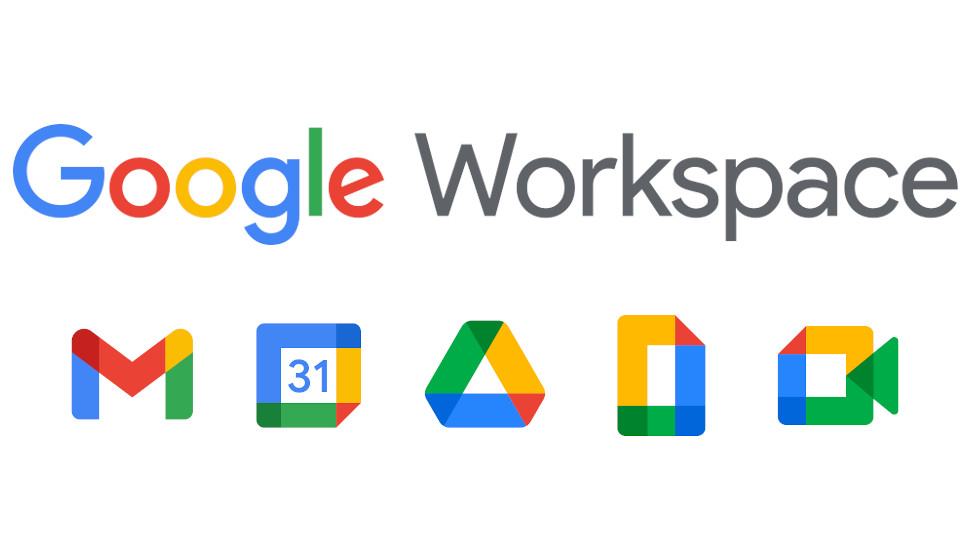 Spark's biggest advantage is native access to Google's ecosystem. Gmail, Calendar, Drive, Docs, Sheets, Slides, YouTube, Maps, and Chrome are where it makes the most sense.
If your work already lives there, Spark has a clean path. It can summarize email, draft from source material, move information into Sheets, and coordinate schedules without making you copy context into a prompt.
The tradeoff is clear. Spark is strongest when Google owns the context. If your work crosses Slack, Telegram, WhatsApp, GitHub, custom APIs, browser sessions, or local files, Spark may only cover part of the workflow.
Still Rolling Out
Spark is also still rolling out. Access is tied to premium Google plans, including Google AI Ultra availability during rollout, and selected business access. So the decision is partly about whether you can use it now and whether the Google-first shape fits your workflow.
What "Claude" Means in This Comparison
When you compare Gemini Spark and Claude, "Claude" can mean the model in chat, Claude Code for development work, or Claude Cowork and related agent features for broader workplace tasks. That is why a fair Gemini Spark vs Claude Cowork comparison has to look at the agent layer, not only the model name.
That distinction matters. A model comparison asks, "Which AI answers better?" An agent comparison asks, "Which system can handle my workflow?"
Claude as a Model
Claude's strength is reasoning quality. It is often excellent for long documents, structured writing, code review, technical planning, and tasks where the answer needs to respect many constraints.
If you are reviewing a contract, debugging code, planning a project, or turning messy notes into a clean brief, Claude often feels easier to trust.
Claude Code and Claude Cowork
 Claude Code is built for repositories, terminals, files, tests, debugging, and pull requests. Claude Cowork is closer to a general work agent, extending Claude into tasks that involve files, tools, and workplace systems.
Spark is Google-native. Claude's agent direction is more reasoning-led and tool-led. If your main work is Gmail and Docs, Spark is simpler. If your main work is technical planning, writing, code, and complex documents, Claude may feel stronger.
Gemini Spark vs. Claude Cowork: The Practical Comparison
The best choice depends on where your work happens, what the agent needs to access, and how much autonomy you want.
| Category | Gemini Spark | Claude |
|---|---|---|
| Best fit | Google Workspace automation | Reasoning, writing, coding, document work |
| Main strength | Background tasks across Google apps | High-quality analysis and structured output |
| Agent style | Persistent, scheduled, Google-native | Tool-led, reasoning-led, product-dependent |
| App access | Strongest inside Google ecosystem | Depends on Claude app, Cowork, Code, connectors, or API setup |
| Model choice | Gemini stack | Claude stack |
| Main limitation | Google ecosystem lock-in and rollout limits | Usage limits and less native Google ownership |
Background Automation
Spark is the clearer choice if background automation is the main feature. It is designed for recurring work: inbox recaps, file organization, spreadsheet updates, trip planning, and repeated admin. This is where its 24/7 AI agent positioning is strongest.
Claude can support agentic workflows too, but the experience depends on the product. Claude in chat is not the same as Claude Code, Claude Cowork, or an API-based agent.
App Access and Integrations
Spark's natural advantage is context. If an agent can see Gmail, Drive, Calendar, Docs, and Sheets in a structured way, it can do useful work without asking you to paste everything manually.
Claude's advantage is task quality. It may not own Google app context in the same native way, but it performs well once you give it the right files, tools, or connected environment.
This is why a good agent is never only a model. It is a model plus tools, memory, permissions, hosting, and review. For a broader way to compare the category, this guide to choosing an AI agent platform gives a useful framework.
Model Quality
For everyday text, both Gemini and Claude are strong enough that the difference may not matter much.
Claude is easier to recommend for long-form writing, code reasoning, complex edits, and dense documents. Gemini is easier to recommend for Google apps, multimodal inputs, web-connected research, and large context tied to Workspace.
The best agent is usually not the one with the best benchmark. It is the one that can access the right data, use the right tools, and stay inside the right boundaries.
Privacy and Permissions
A 24/7 agent has a different trust model than a chatbot. A chatbot usually sees what you paste into it. An agent may have ongoing access to email, files, calendars, browser state, messages, or APIs.
That does not make agents automatically unsafe, but setup matters more. Use limited permissions, clear approval rules, and a sensible boundary between reading information and taking action. Before connecting sensitive systems, review practical AI agent security basics.
Pricing and Limits
Pricing is harder to compare than it looks. Spark is tied to premium Google access during rollout. Claude has different plans, usage limits, and product-specific constraints. An independent agent may also involve hosting, model API usage, storage, maintenance, and monitoring.
The better question is not "Which is cheaper?" It is "How often will this agent run, what will it access, and what happens if it fails?"
Which One Should You Use?
Choose Gemini Spark if your work starts and ends inside Google Workspace. It is the best fit for Gmail summaries, calendar planning, Drive cleanup, Docs and Sheets automation, travel coordination, and recurring personal tasks.
Choose Claude if your work depends on reasoning quality. It is a strong fit for long documents, careful writing, code, planning, research, and tasks where a better answer saves rework.
Choose a more independent agent setup if you want control over the runtime. That usually means you care about:
- using more than one model provider
- connecting channels such as Telegram, Slack, Discord, or WhatsApp
- working across browser tasks, files, APIs, and internal tools
- keeping the agent online without relying on a personal laptop
- deciding where the agent runs and what it can access
At that point, the decision moves beyond Gemini Spark vs. Claude. You are choosing where your agent lives.
The OpenClaw Angle: When Runtime Matters More Than the Model
OpenClaw approaches the agent problem from a different direction. Instead of choosing one AI app and staying inside that app's ecosystem, OpenClaw gives you a flexible runtime for models, tools, browser workflows, files, APIs, and messaging channels. That makes it relevant as a Gemini Spark alternative when control matters more than staying inside Google.
If you want a deeper side-by-side with Google's agent direction, this Gemini Spark vs OpenClaw comparison is the most direct next read.
One Agent, Multiple Models
 Spark uses the Gemini stack. Claude uses the Claude stack. OpenClaw can be configured around different model providers.
You might use Claude for careful writing, Gemini for large-context work, GPT for tool-heavy workflows, or another model for cost-sensitive tasks. A flexible runtime lets the task decide the model.
This is where MyClaw fits naturally. MyClaw hosts private OpenClaw instances so you can run an always-on agent without setting up servers, Docker, ports, updates, backups, and security details yourself. It is a managed path for OpenClaw-style control without owning the infrastructure.
Messaging, Browser, Files, and APIs
Many real tasks do not live neatly inside one app. A useful agent may need to receive a Telegram message, check a website, update a file, call an API, draft a reply, or prepare a weekly report.
That is why runtime matters. If the agent has to stay online, hold context, connect to tools, and work across systems, you need a stable place for it to run.
For that path, MyClaw is most relevant when you want a private OpenClaw agent that stays available 24/7 without the maintenance burden of self-hosting. If deployment is the main concern, the guide to best OpenClaw hosting breaks down managed hosting, VPS, and self-hosted options.
Conclusion
Gemini Spark vs Claude is not just a question of which AI model is smarter. It is a question of where your work happens and what kind of assistant you want.
Gemini Spark is the better fit if you want a 24/7 agent for Gmail, Calendar, Drive, Docs, Sheets, and other Google-connected tasks. Claude is the better fit if you care most about reasoning, writing quality, code, long documents, and structured thinking.
But if the goal is a private AI agent that can stay online, use different models, connect to messaging channels, and fit around your existing tools, the decision shifts. You are choosing an AI agent runtime.
For that use case, OpenClaw is one of the most practical directions, and MyClaw makes it easier to run without handling the infrastructure yourself.
Skip the setup. Get OpenClaw running now.
MyClaw gives you a fully managed OpenClaw (Clawdbot) instance — always online, zero DevOps. Plans from $19/mo.