OpenClaw vs. Manus AI: Open-Source Control vs. Cloud Convenience
If you are comparing OpenClaw vs Manus or OpenClaw vs Manus AI, you are probably not just asking which product is more powerful. You are deciding what kind of AI workflow you want to live with every day.
OpenClaw and Manus AI solve different problems in practice. OpenClaw appeals to users who want more control, more customization, and more ownership over how an AI assistant runs. Manus AI appeals to users who want a cloud agent they can use quickly without thinking much about infrastructure. That makes this comparison less about raw capability and more about tradeoffs: flexibility vs. convenience, control vs. speed, and self-hosting vs. ready-to-use access.
TL;DR - OpenClaw or Manus?
Choose OpenClaw if you want an open, customizable assistant that you can shape around your own tools, models, and workflows.
Choose Manus AI if you want a cloud-based AI agent that is easier to start and better suited to fast, one-off task execution.
What is OpenClaw?
 OpenClaw is an open and customizable AI assistant framework built for users who care about control. It is a better fit for people who want to decide how the assistant is deployed, what models it uses, what tools it connects to, and how it behaves over time.
That flexibility is the main reason people choose OpenClaw. It can fit long-running workflows, persistent assistants, messaging-based operations, and more tailored internal use cases. Instead of using a fixed cloud product exactly as provided, you can adapt OpenClaw to match your environment.
With that added control comes more hands-on work. OpenClaw often involves deployment decisions, OpenClaw hosting setup, configuration, updates, and ongoing maintenance that many users do not have to think about with a cloud-only AI product.
What is Manus AI?
 Manus AI is a cloud AI agent product focused on convenience and fast task execution. It is designed for users who want to give the system a goal, let it work in a managed environment, and get results without worrying much about deployment or infrastructure.
That makes Manus attractive for people who value speed and ease of use. If your priority is to start quickly and complete tasks without configuring your own stack, Manus has a clear advantage. It reduces technical overhead and feels more approachable for users who do not want to self-host an AI system.
Also interested >> OpenClaw vs. Claude Cowork: Which One Is Better?
The tradeoff is that you get less control over the underlying environment. Compared with OpenClaw, Manus is generally less customizable and less aligned with users who want deeper ownership over data, models, and workflow design.
OpenClaw vs. Manus AI: Side-by-Side Comparison
Deployment:
OpenClaw is usually self-hosted or user-managed. Manus AI is cloud-hosted and ready to use. If convenience matters most, Manus starts faster. If ownership matters most, OpenClaw is stronger.
Setup Time:
Manus AI is the easier option for immediate access. OpenClaw takes more effort because deployment, configuration, and integration work are often part of the process. There is also a simple way to employ the environment with managed OpenClaw hosting, like myclaw.ai.
Privacy / Data Ownership:
OpenClaw is better for users who want stronger control over where data lives and how the system operates. Manus is more convenient, but it is still a managed cloud environment.
 Customization:
OpenClaw wins here. It is better suited to users who want to shape behavior, integrate custom tools, and build more tailored workflows.
Model Choice:
OpenClaw is generally more flexible if model choice is important to you. Manus is more productized and less focused on user-controlled model orchestration.
Browser / Computer Use:
Manus is often more naturally positioned for agent-style task execution in a managed environment. OpenClaw can support complex workflows too, but the path is usually less plug-and-play.
Messaging Integration:
OpenClaw is often stronger for users who want assistants that stay connected to messaging tools and operational channels over time.
24/7 Persistence:
OpenClaw can be a strong fit for persistent, always-available assistants, especially when it is deployed as part of a longer-term workflow stack. Manus is often better understood as a cloud agent for execution convenience.
 Cost Predictability:
This depends on usage, but OpenClaw can offer more control over infrastructure and model choices. Manus is simpler to consume, though pricing predictability depends on how the service is packaged and used.
Best For:
OpenClaw is best for users who want open-ended control and customization. Manus is best for users who want fast access and minimal setup.
Why MyClaw Can Be a Better Fit Than Self-Hosted OpenClaw
This is where many OpenClaw vs. Manus AI comparisons stop too early. They compare features, but they skip the real adoption question: do you actually want to run OpenClaw yourself?
A lot of users like the OpenClaw model more than the Manus model. They prefer the flexibility, the ownership, and the idea of a more customizable assistant. But that does not mean they want to provision servers, maintain updates, troubleshoot issues, and manage hosting over time.
That gap matters. In real buying decisions, many users are not choosing between OpenClaw and Manus in theory. They are choosing between:
-
a convenient cloud product they can use now
-
a flexible open system; they would need to deploy themselves
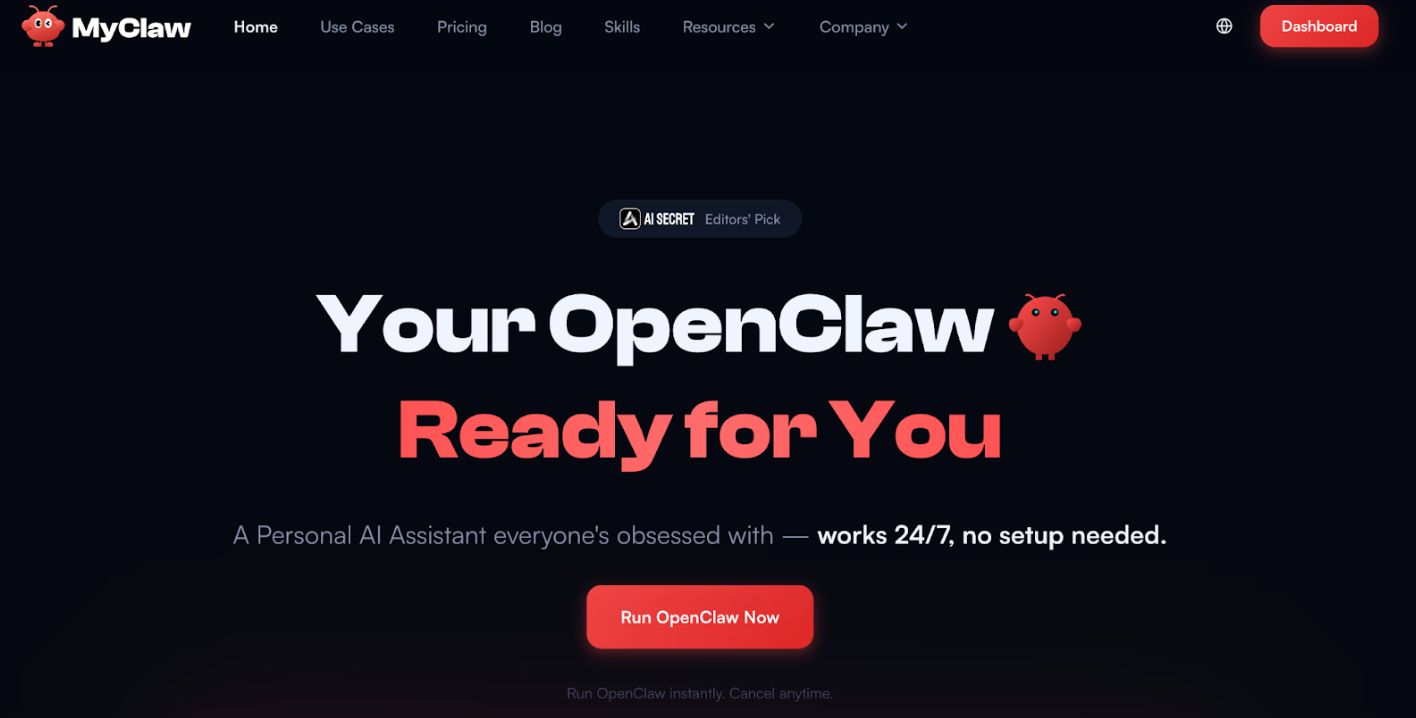 MyClaw is a better fit for people who want the second option without taking on the deployment burden.
Instead of self-hosting OpenClaw manually, MyClaw gives users a simpler way to get started. It removes much of the setup friction and reduces the maintenance work that often turns an open-source preference into an infrastructure project. That makes it especially relevant for convenience-focused users who still prefer the OpenClaw direction.
In that sense, MyClaw is not just an OpenClaw hosting layer. It is the practical answer for users who are thinking, "OpenClaw looks better for me than Manus, but I do not want to self-host.”
FAQ about OpenClaw vs. Manus AI
Q: Is OpenClaw better than Manus AI?
It depends on what “better” means for you. OpenClaw is better for control, customization, and ownership. Manus AI is better for quick access and lower setup friction.
Q: Is Manus better for one-off tasks?
Yes, often. Manus is usually the better fit when you want to move quickly, hand over a task, and avoid technical setup.
Q: Is there a hosted version of OpenClaw?
Yes. That is the gap hosted solutions aim to solve. Users who want OpenClaw without managing infrastructure often look for managed OpenClaw options such as MyClaw.
Q: What is the easiest way to use OpenClaw without setup?
The easiest way is to use a managed OpenClaw option instead of self-hosting. MyClaw is designed for that exact use case.
Q: Is MyClaw a good alternative to Manus?
It can be, especially if you like the OpenClaw approach but want Manus-level convenience when it comes to getting started. MyClaw is a strong fit for users who want less setup without giving up the OpenClaw ecosystem.
Conclusion
The best answer to OpenClaw vs. Manus depends on what you value more: open-ended control or cloud convenience.
OpenClaw is the stronger choice if you want flexibility, ownership, and a system you can shape around your own workflow. Manus AI is the stronger choice if you want speed, simplicity, and a lower-friction cloud experience.
But for many users, the real answer sits in the middle. If OpenClaw feels like the better long-term fit, but self-hosting feels like too much work, MyClaw is the easiest way to use OpenClaw without setup.
Skip the setup. Get OpenClaw running now.
MyClaw gives you a fully managed OpenClaw (Clawdbot) instance — always online, zero DevOps. Plans from $19/mo.