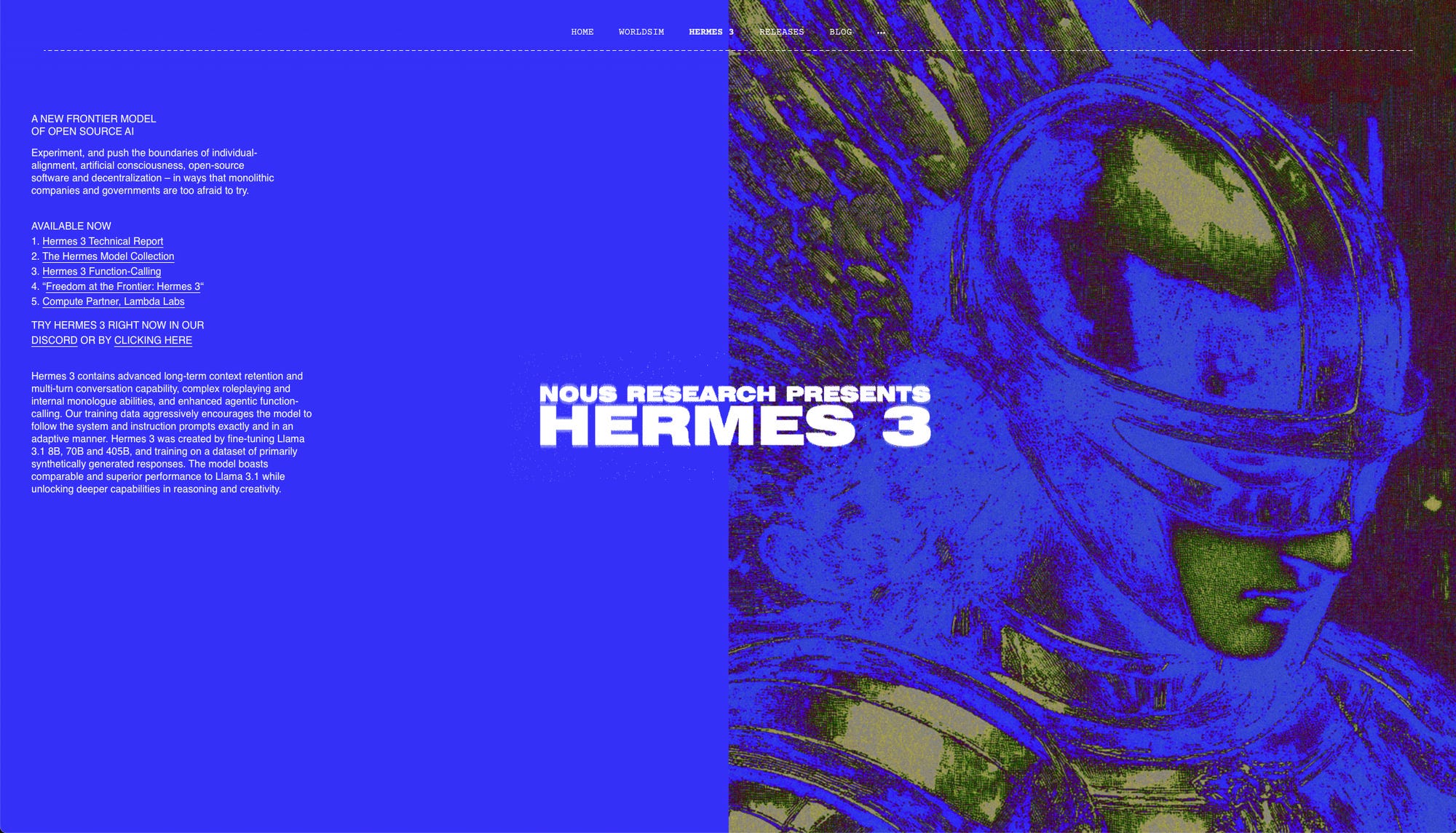
Hermes 3 AI Model: Llama 3.1 and What's Special About It
The Hermes 3 AI model is best understood as a model layer, not a complete AI assistant by itself. It can answer, follow instructions, produce structured output, and support tool-calling workflows. But if you want an assistant that remembers context, uses apps, handles files, or runs in the background, the model needs an agent runtime around it.
Hermes 3, Hermes Agent, and an always-on assistant platform solve different parts of the stack. Hermes 3 is about model capability. Hermes Agent is about agent behavior. Hosting is about making the system usable every day.
What Is the Hermes 3 AI Model?
Hermes 3 is a large language model from Nous Research, built around the Llama 3.1 model family. In practical terms, it is the part of the system that reads instructions and decides what text or structured output to produce.
 The important point is simple: Hermes 3 can be the brain of an AI assistant, but it is not the whole assistant. A model can write, reason, summarize, format JSON, and prepare tool calls. It does not automatically provide memory, browser control, scheduling, permissions, or hosting.
This is why model choice is only one layer of an AI workflow. A strong model can improve reasoning quality, but the surrounding system decides whether the assistant can actually complete tasks reliably.
What Does Hermes 3 Llama 3.1 Mean?
The phrase Hermes 3 Llama 3.1 usually points to the relationship between Hermes 3 and Meta's Llama 3.1 base model family. Llama 3.1 provides the foundation model architecture and weights, while Hermes 3 is a fine-tuned model built for stronger instruction following, conversation, structured output, and agent-style use cases.
Not every Hermes 3 setup behaves the same. Performance depends on model size, quantization, inference provider, context length, prompt format, and tool integration. A local setup may offer more control, while an API-hosted setup may be easier to maintain.
If you are choosing models for agent workflows rather than chat alone, compare them by tool use, cost, privacy, and maintenance. This is the same lens used in our guide to the best model for OpenClaw.
Hermes 3 AI Model vs. Hermes Agent
The difference between Hermes 3 AI model vs. Hermes agent is the gap between a model and an agent system.
Model Layer vs Agent Runtime
Hermes 3 is the reasoning and generation layer. It produces answers, plans, summaries, tool arguments, and structured responses. Hermes Agent is the runtime layer. It coordinates tools, workflows, memory, skills, and repeated tasks around a model.
 A simple way to think about it: Hermes 3 decides what should be said or done next. Hermes Agent helps create the environment where actions can be organized and executed.
Why Skills Matter
Skills matter here because they define repeatable workflows instead of asking the model to improvise every time. For more on that layer, see this guide to Hermes Agent skills.
Why a Model Alone Is Not Enough for an AI Assistant
A model can plan a workflow, but a usable assistant needs more than planning. It needs a runtime that can hold state, call tools, manage permissions, recover from errors, and continue work across sessions.
For example, a research assistant needs browser access and source handling. A document assistant needs file access. An operations assistant may need integrations, memory, and scheduled execution. Without those layers, even a capable model behaves more like a chatbot: useful in the moment, but limited outside the conversation.
This is the practical gap between a language model and an AI agent. If that distinction is still fuzzy, the broader comparison in AI Agent vs. Chatbot explains why autonomy, tools, and persistence change the user experience.
When the Goal Is a Working Assistant
 Once the model and agent layers are clear, the next question is deployment. Running an assistant means keeping the system available, configured, connected, and updated. That is where a managed environment becomes useful.
MyClaw fits this layer. It is not a replacement for Hermes 3 or a rebrand of Hermes Agent. It is better understood as managed OpenClaw hosting for a private AI assistant that can stay online and support real workflows without server setup.
If Hermes 3 is available through a provider supported by your setup, it can potentially serve as the model layer while the assistant runtime handles tools, memory, and execution. For a broader view of deployment choices, compare managed, VPS, and self-hosted options in best OpenClaw hosting.
Which Should You Use?
Use Hermes 3 if your main goal is to test or run an open AI model. It is the right place to focus when you care about model behavior, output quality, base model lineage, or local deployment.
Use Hermes Agent if your goal is to experiment with agent frameworks, skills, and tool-driven workflows around different models.
Use MyClaw if your real goal is not model testing, but operating a private assistant that stays available, connects to a workflow, and avoids the maintenance burden of running the stack yourself.
Conclusion
The hermes 3 AI model is the model layer. The phrase hermes 3 llama 3.1 explains its base model relationship. The comparison between hermes 3 AI model vs hermes agent is really a comparison between model capability and agent runtime.
For learning and testing, Hermes 3 is the right topic. For agent workflows, Hermes Agent becomes relevant. For a private assistant that can run continuously and support real work, the runtime and hosting layer matter just as much as the model.
Skip the setup. Get OpenClaw running now.
MyClaw gives you a fully managed OpenClaw (Clawdbot) instance — always online, zero DevOps. Plans from $19/mo.