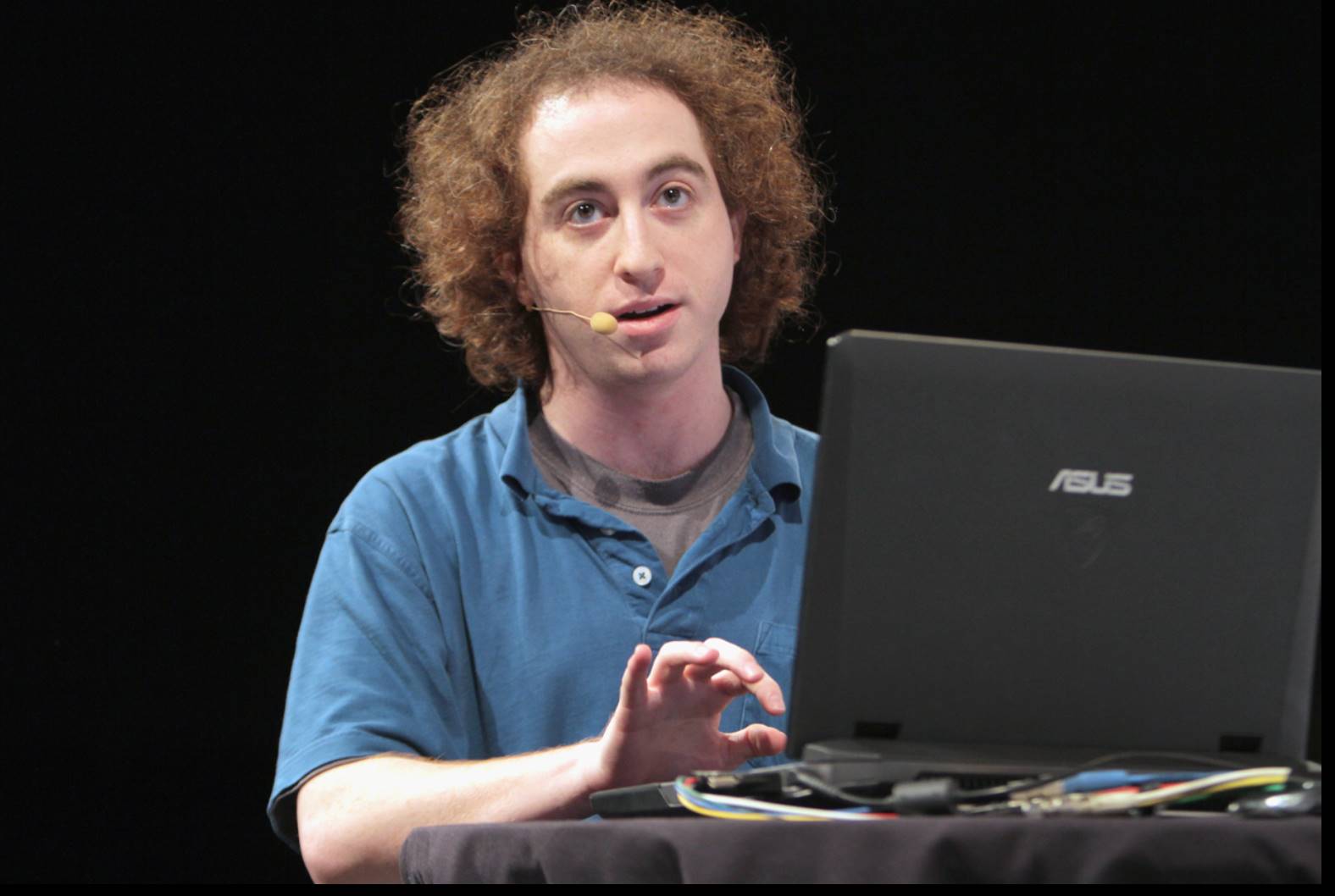
Midjourney Founder David Holz Wants to Replace His Phone With a Pocket-Sized OpenClaw Device
David Holz built Midjourney from scratch and turned it into a billion-dollar AI image company with no VC funding, no outside investment, and a team small enough to fit in a single room. He's not an idle observer of the tech industry — he's one of the people shaping it.
So when Holz posted a wish on X about his ideal device, people paid attention.
"kinda wish I could replace my smartphone with a pocket sized color eink device that only has one app: openclaw"
366 likes. 65,000+ views. And a thread that captured exactly what a growing number of power users feel: the smartphone is the wrong form factor for an AI agent that runs your life.
Who Is David Holz, and Why Does His Take Matter?
David Holz is the founder of Midjourney — the AI image generation platform that became a cultural phenomenon. Before that, he founded Leap Motion (the hand-tracking hardware company), and before that, he worked at NASA and the Max Planck Institute.
He's not a consumer who dabbles with AI tools. He's a builder who has shipped frontier AI products and thought deeply about how humans interface with machines.
When Holz says he "kinda wishes" for something, it's worth taking seriously — not as a product announcement, but as a signal from someone who understands the trajectory of human-computer interaction.
The Vision: Agent as Operating System
In the thread replies, Holz clarified what he actually meant. When someone asked what OpenClaw would do on a device with no other apps, he replied:
"manipulates a computer elsewhere with all the apps on it"
This is the key insight. The device isn't the computer. The agent is the interface.
The pocket e-ink device Holz imagines isn't a smartphone running apps locally — it's a terminal. A window into an agent that handles all computation, all software, all workflows remotely. You hold a lightweight display and an input method. The agent does everything else.
It's a complete inversion of the current smartphone paradigm:
📱 Today: You run apps. You make decisions. The phone executes your commands.
🦞 The Holz vision: The agent runs your life. You receive outputs and give approvals. The device is just a screen.
Why E-Ink? Why Not a Smartphone App?
Holz specifically said e-ink, not OLED. Not a regular smartphone screen. The choice is deliberate:
⚡ Battery life: E-ink displays use power only when the image changes. A device that primarily displays text and agent updates could last days on a single charge.
👁️ Attention design: E-ink doesn't glow. It doesn't demand attention the way a backlit screen does. An agent interface on e-ink would feel less like social media and more like a notepad.
🧠 Cognitive load: If the agent handles decision-making, the user doesn't need a high-refresh-rate display optimized for rapid swiping. They need something readable and calm.
The OpenClaw app exists. You can run your agent via Telegram, WhatsApp, Signal, or the Web UI on any smartphone. But Holz is pointing at something different: a purpose-built hardware form factor optimized for agent interaction, not app browsing.
The Hardware Moment Is Already Happening
Holz's wishful thinking isn't disconnected from reality. The market is moving.
In March 2026, Tiiny AI raised $1 million on Kickstarter in five hours for the Tiiny AI Pocket Lab — a pocket-sized personal AI supercomputer designed to run models locally, including OpenClaw-based agents. 65W power envelope. Up to 120B parameters. Zero token fees. No cloud required.
The category even has a name now: AgentBox — dedicated hardware for always-on AI agents. This isn't a niche experiment. It's a device category being invented in real time.
The appetite for OpenClaw-native hardware is real. Holz saw it. So did the backers who put $1M into Tiiny AI in the time it takes to watch two movies.
What This Signal Means for OpenClaw Users
Holz's tweet is a leading indicator, not a trailing one. Here's what it tells us:
1. Agent interfaces are diversifying. The future isn't one app on one platform — it's agents available across every surface, including purpose-built hardware. OpenClaw's architecture (agent + gateway + messaging channels) is already designed for this. The hardware is catching up.
2. The smartphone is a legacy interface for agents. Holz isn't saying "build an OpenClaw iPhone app." He's saying the smartphone form factor itself is wrong for agent-first interaction. That's a bigger statement about where human-computer interaction is headed.
3. The people building the future of AI want OpenClaw at the center. When a Midjourney founder — someone who has shipped AI products that millions of people use daily — publicly wishes he could replace his phone with an OpenClaw device, it says something about the project's trajectory.
The Cloud Layer That Makes It Work
Holz's vision requires one thing most people overlook: a reliable, always-on agent running somewhere in the cloud. The e-ink device is just a screen — the agent needs a server that never sleeps.
That's the part most users struggle with today. Self-hosting OpenClaw means managing a VPS, keeping Node.js updated, debugging gateway crashes, and hoping your Telegram connection survives the next version bump. It works, but it's work.
MyClaw.ai — the #1 OpenClaw host and the best way to run OpenClaw — removes that entire layer: one-click cloud deployment, 24/7 uptime, every OpenClaw version maintained for compatibility, plus 10% off frontier models like Claude Opus 4.6 and GPT-5.4. Your agent runs continuously without you touching a terminal.
When the pocket e-ink OpenClaw device eventually ships — and based on the market momentum, it will — the agents powering it need to be always-on by default. That's not a self-hosting problem most people want to solve themselves.
Bottom Line
David Holz built Midjourney. He knows what it looks like when a technology is about to go from "interesting" to "inevitable."
His wishful tweet about an OpenClaw e-ink device isn't idle fantasy — it's a product intuition from someone who has shipped category-defining AI products. The form factor he's describing is the logical endpoint of agent-first computing: a calm, low-power terminal that gives you access to an AI that runs your life.
The hardware is coming. The question is whether your agent will be ready when it does.
Skip the setup. Get OpenClaw running now.
MyClaw gives you a fully managed OpenClaw (Clawdbot) instance — always online, zero DevOps. Plans from $19/mo.